Desert in the snow around Sonnblick

Eroded Saharan dust (SD) is episodically transported over thousands of kilometers with synoptic wind patterns towards Europe and reaches Austria several days per year. The SD is removed from the atmosphere via dry or wet deposition processes and thereby significantly changing the chemical composition of the precipitation or the affected environment. On the one hand, SD serves a high ionic input leading to an increase of many ionic species especially Ca2+, Mg2+ or SO42-. On the other hand, SD provides a high alkaline input neutralizing acidic components and causing the pH to increase. Both effects can influence the prevailing ecological system.

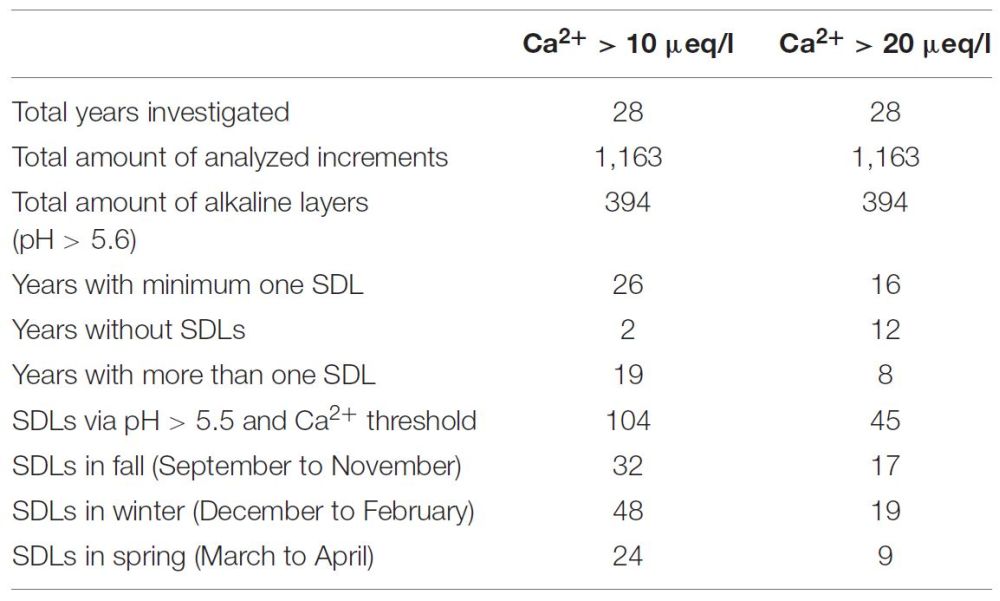
Based on the pH and the Ca2+ concentrations of snow samples from Goldbergkees collected annualy at the end of the winter accumulation period, SD affected snow layers (SDLs) within the 30-year long snow chemistry data set were identified. Using a pH>5.6 and Ca2+>10µeq/l as criteria almost every year SDLs could be found (compare Table 1) whereas their contribution to the mean annual ion deposition (compare Figure 1) is only relevant for single years with either few but strong single events (e.g. 2016) or a higher number of weak events (e.g. 1996).
The long term trends of ion deposition are not affected by the deposition of SD.

Results of this study are published here.
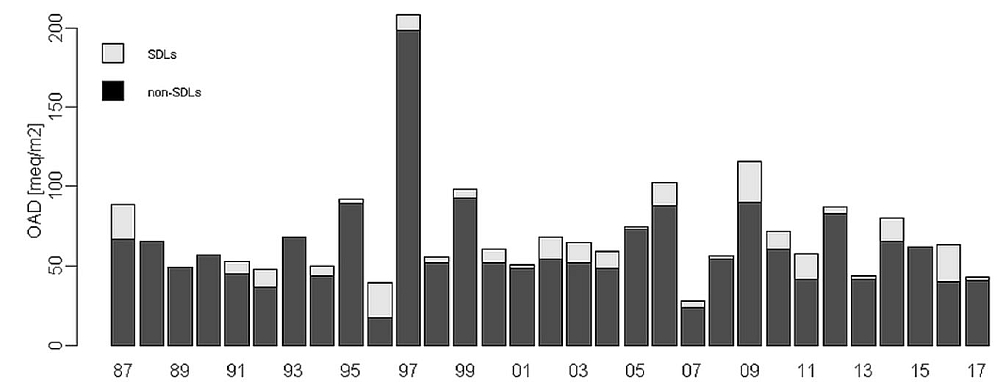
Interannual variability of the overall annual deposition load (OAD) separated in the contribution of SDLs in gray and non-SDLs in black.
Overview and seasonality of the number of identified SDLs within snow pack data (1987–2017, missing data for 1988-1990)

Long-term study at Sonnblick glaciers: explicit reduction of air pollutants in the snowpack

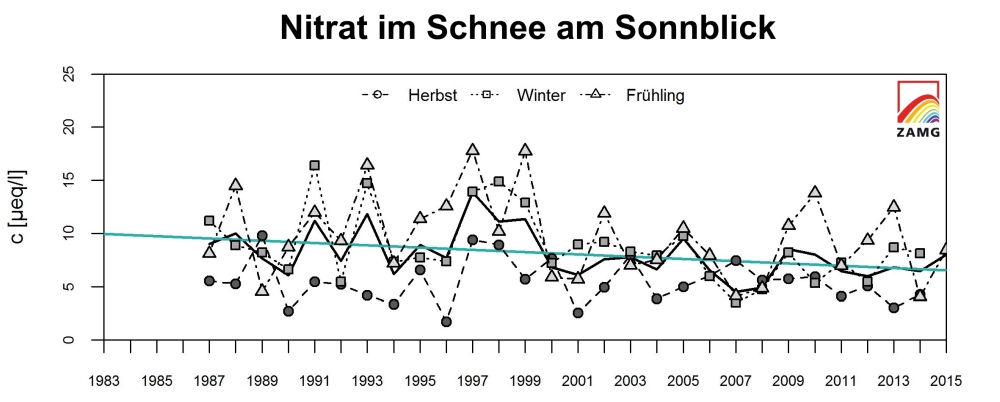
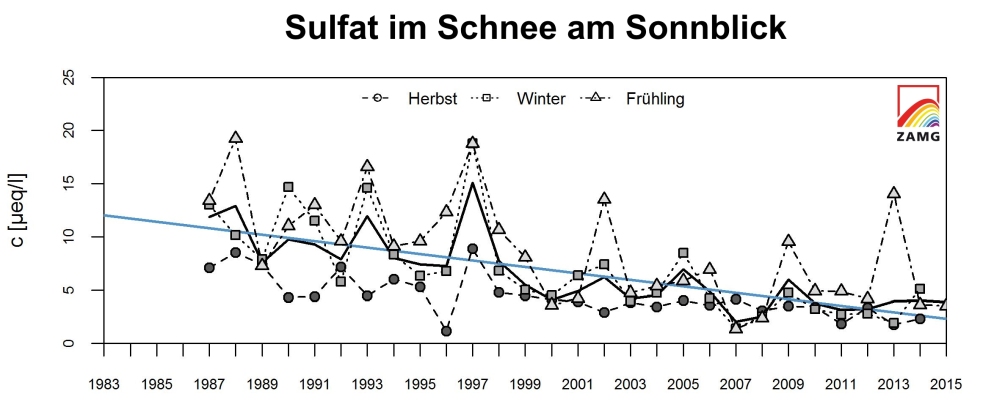
A study from ZAMG, TU Wien, University of Graz and IIASA showed a distinct reduction of Sulfate and Nitrate ion deposition in snowpack samples over the last 30 years (1983-2014). The total ion concentration declined by 25% whereas single ions such as Nitrate and Sulfate decreased much more by 30% and even 70%, respectively. Dissolved ions are stored in the snowpack and released during snow melt. The rapid release of these pollutants acidifies the meltwater and can induce an “acid shock” in surrounding ecosystems like streams, rivers and soils. The reduction of the deposition of acidifying ions, such as Sulfate and Nitrate, reflects the successful emission reductions of their precursor gases SO2 and NOx, mainly originating from anthropogenic sources like traffic and industry.
Both ions show a clear seasonality with elevated spring concentrations compared to fall snow, reflecting the beginning of vertical mixing in the atmosphere in spring.

Nitrate in the snowpack at Sonnblick.
Sulfate in the snowpack at Sonnblick.
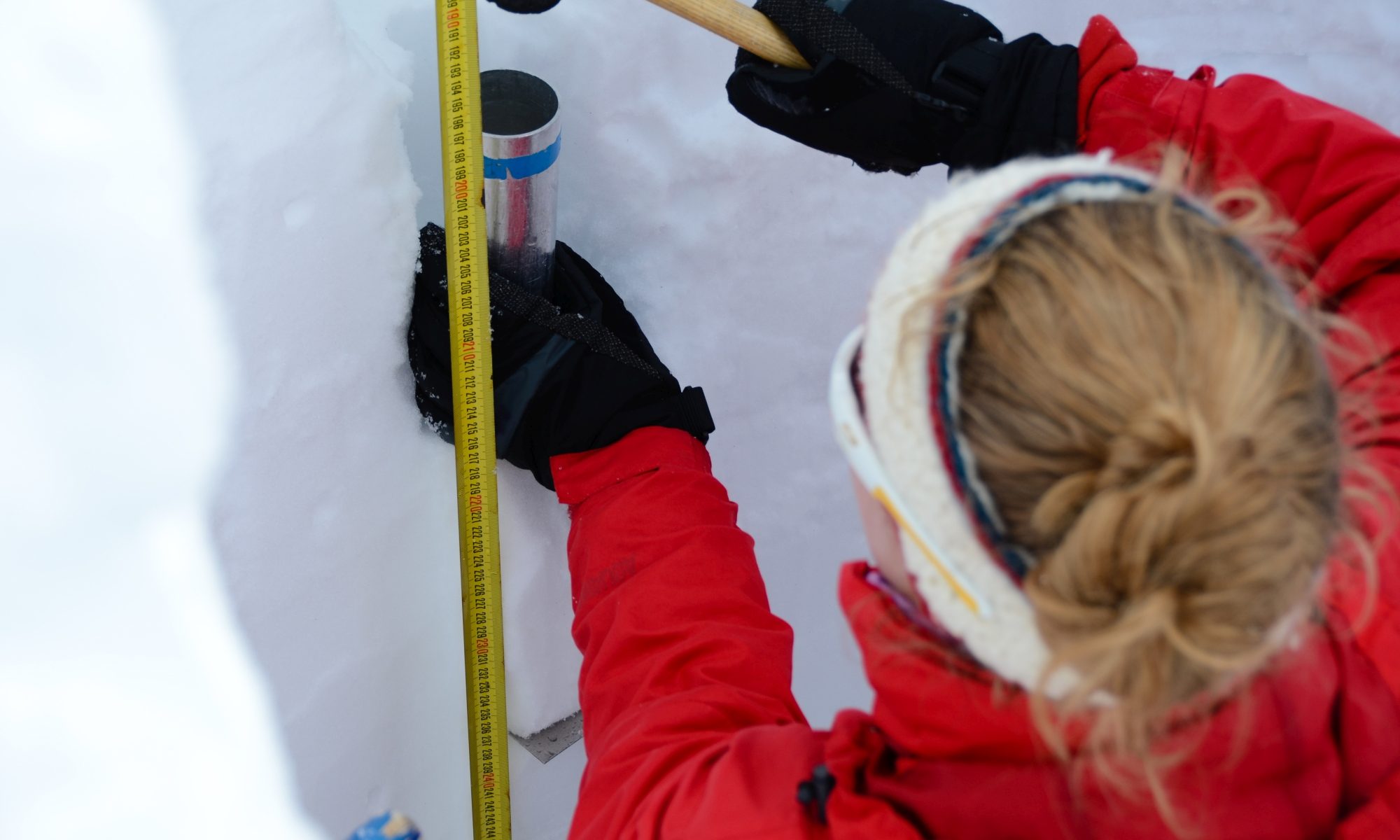
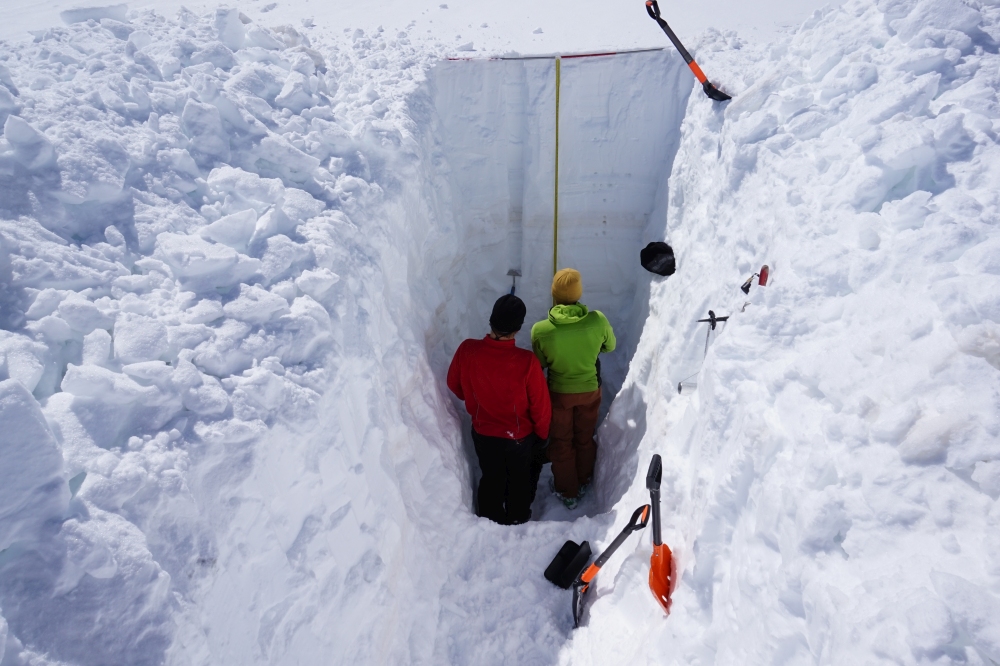
Density and temperature measurements in a snow pit with a Sahara dust layer at 120 cm (photo: A. Neureiter).